
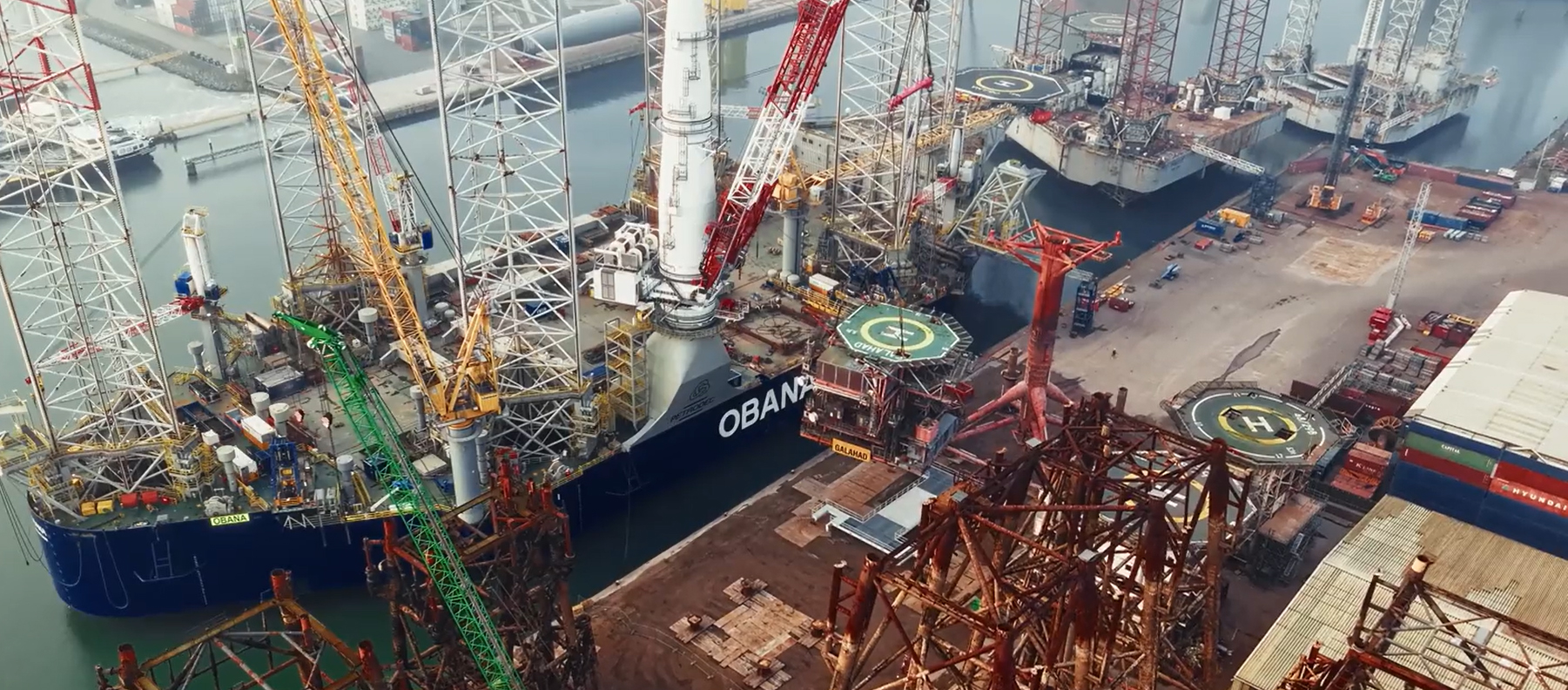
Complex & Multi-Lug Lifts
Lifting
Beams
Engineered lifting beams for restricted headroom, multiple pick points, complex load geometry and heavy project requirements. Choose a configurable Multi-Point system or move to a bespoke beam designed around the lift.
Lifting Beam Guide
What Is A Lifting Beam?
A lifting beam is a below-the-hook lifting device used to transfer load between the crane connection above and one or more lifting points below. Unlike a conventional spreader beam, a lifting beam carries significant bending load and can use a compact upper lifting arrangement.
That makes lifting beams particularly useful where headroom is restricted, where the load needs support from several lower pick points, or where the lifting geometry cannot be solved efficiently with a standard two-point spreader arrangement.
Multisec supplies configurable Multi-Point lifting beams for repeatable lifting requirements and project-specific bespoke lifting beams where capacity, geometry, headroom or certification falls outside the standard range.
Standard Range
Multi-Point Lifting Beams
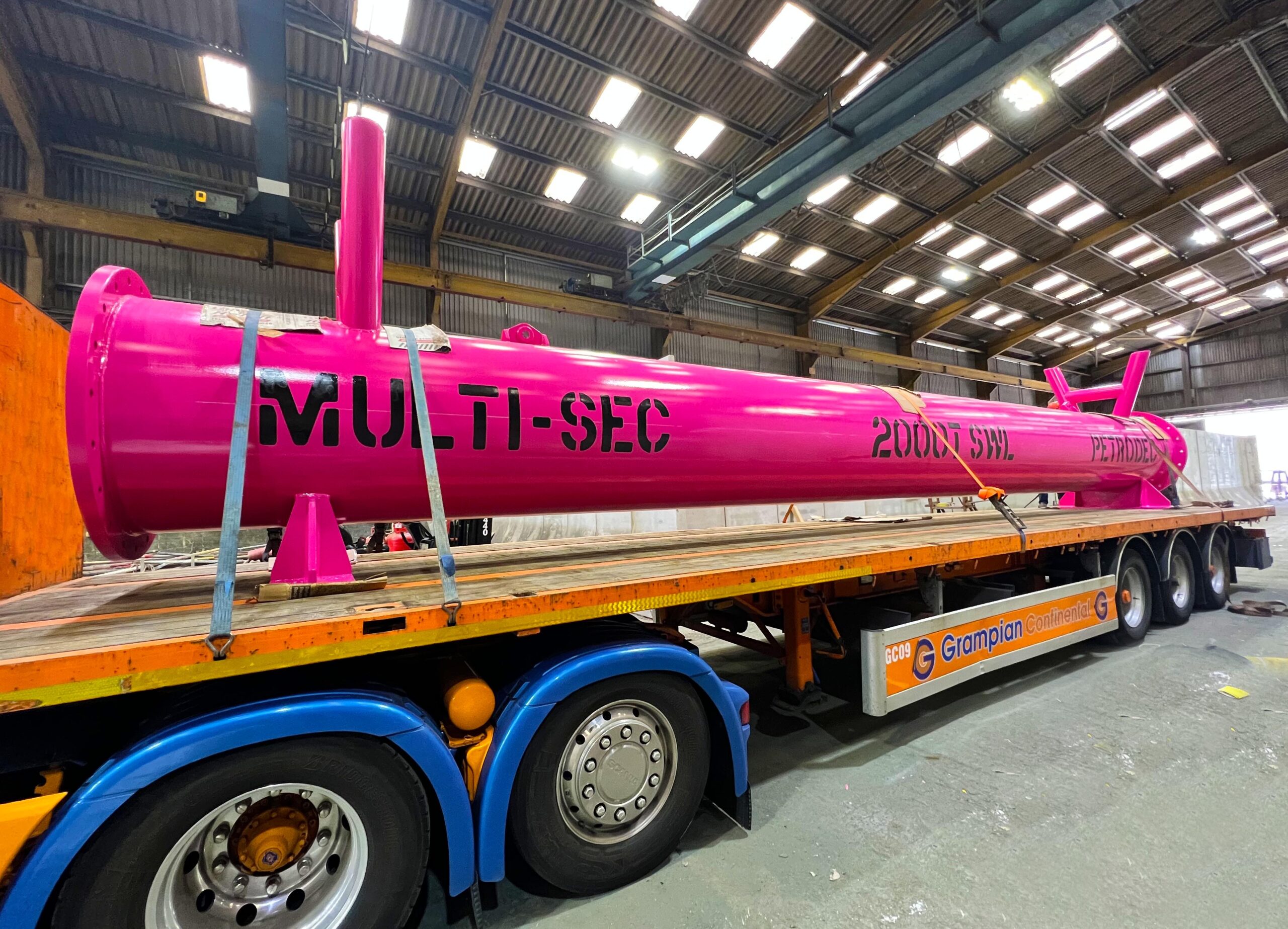
Multisec Multi-Point lifting beams, also known as Multi-Lug beams, are designed to distribute support across several lower lifting points. They provide controlled load support for fabricated structures, uneven loads and lifting operations where two lower pick points are not enough.
The modular MP-13, MP-25, MP-34 and MP-50 use interchangeable 3m and 6m beam sections and can be assembled in standard arrangements up to 12m. MP-100 and MP-300 provide higher-capacity routes for heavier Multi-Point lifts.
Range At A Glance
Lifting Beam Range: 13t To 300t
Use the standard range as a starting point, not as a substitute for model-specific load data. Working Load Limit can reduce as span or lifting geometry changes, so the applicable technical chart must be checked before a configuration is selected.
| Model | Working Load Limit | Maximum Standard Span | Technical Page |
|---|---|---|---|
| MP-13Modular Multi-Lug | 13 tonnes | Up to 12m | View MP-13 → |
| MP-25Modular Multi-Lug | 25 tonnes | Up to 12m | View MP-25 → |
| MP-34Modular Multi-Lug | 34 tonnes | Up to 12m | View MP-34 → |
| MP-50Modular Multi-Lug | 50 tonnes | Up to 12m | View MP-50 → |
| MP-100Heavy-Lift Multi-Point | Up to 100 tonnes | 11.5m option | View MP-100 → |
| MP-300Heavy-Lift Multi-Point | 300 tonnes | 10m beam | View MP-300 → |
For MP-13 to MP-50, standard modular arrangements use 3m and 6m beam sections. Capacity depends on span, lifting configuration and geometry. Always use the current model-specific technical data when specifying a lift.
Engineered To Order
When Standard Is Not Enough
Some lifts sit outside a standard product range. Unusual lifting-point geometry, restricted headroom, offset centres of gravity, tandem crane arrangements, environmental loads or project-specific certification can all change the beam design.
Multisec designs and manufactures bespoke lifting and spreader beams around the actual lifting requirement. Engineering review, manufacture, proof load testing and project documentation can be managed through the same project route.
This is also the route for capacities or spans beyond the standard Multi-Point range and for projects where the beam must interface with a specific asset, rigging arrangement or offshore lifting procedure.
View Bespoke Lifting Beams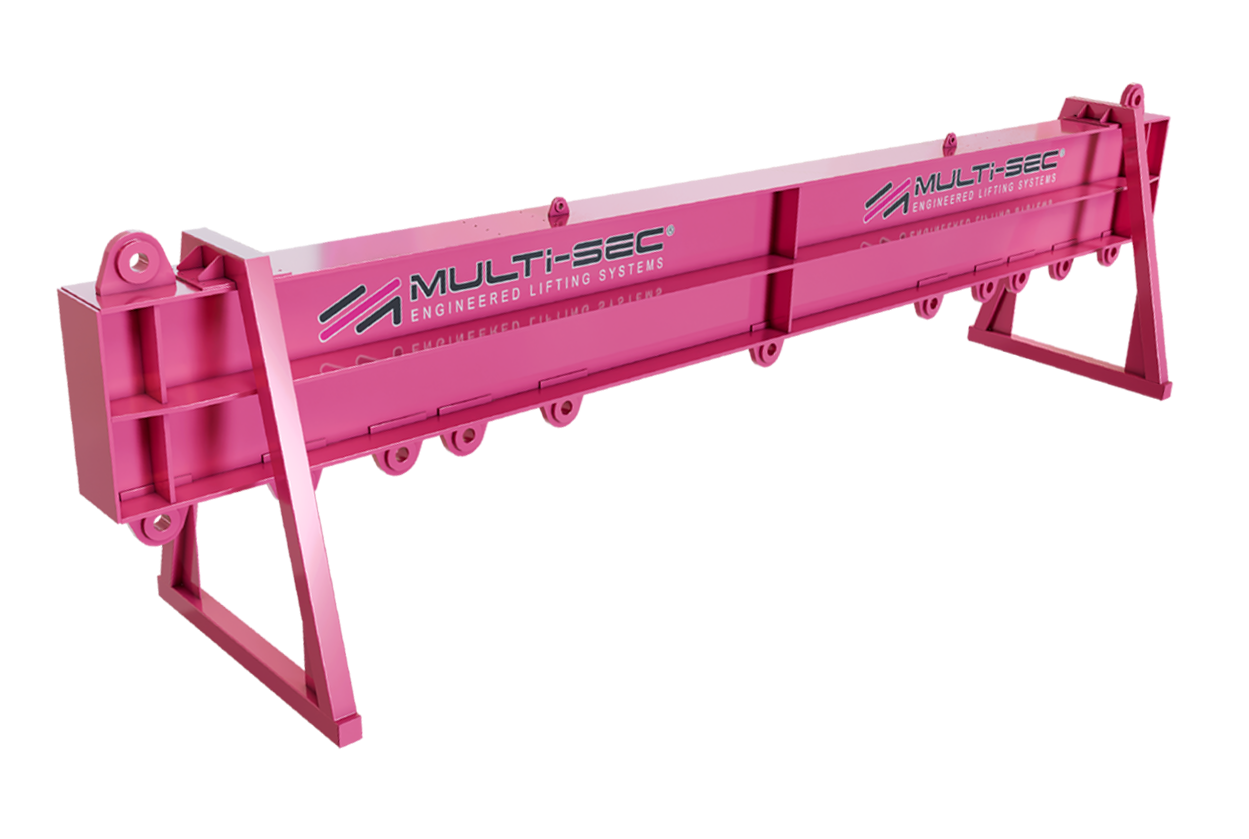
Project Evidence
Proven On A Real Offshore Lift
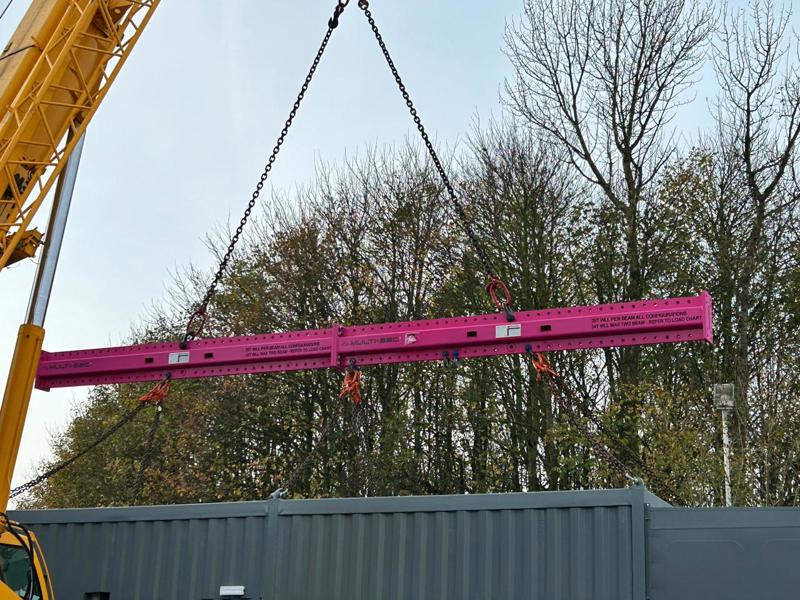
For Enshore Subsea, Multisec engineered a bespoke Joint Over Boarding Beam for complex subsea cable handling. The beam was designed, manufactured and proof load tested at Britannia Testhouse before its first offshore deployment.
“Delivered on spec, on budget, and ahead of schedule.”Enshore Subsea
Bespoke Multi-Point Beam
15.5m Span. 16 Lower Lift Points.
The project demonstrates the difference between a catalogue lifting beam and a beam engineered around the lift. The 35 tonne system combined a long span with sixteen lower lifting points and a complete rigging package for an offshore application.
Choose By Requirement
Which Lifting Beam Route Fits The Lift?
Start with the load, lifting points, available headroom and crane arrangement. The product name comes after the lifting requirement is understood.
Compact Upper Rigging
Use a lifting beam or Centre Point arrangement where vertical rigging space above the load is restricted.
Three Or More Lower Pick Points
Use the Multi-Point range where a load needs distributed support across several lower lifting positions.
Wide Load With Two Main Pick Points
Where headroom allows angled top slings, a spreader beam can reduce bending and keep lower slings closer to vertical.
High Capacity Or Unusual Geometry
Move to project engineering where standard capacity, span, lifting points, crane arrangement or certification is not suitable.
Still not sure? Send WLL, span, lifting points, headroom and any drawings. Multisec can review the information before recommending a standard or bespoke route.
Send Lift Details →Design • Manufacture • Test
Behind The Lift
Selection is only one part of a lifting-beam project. Multisec combines engineering review, UK manufacture, in-house proof load testing and project documentation to support equipment from concept through to delivery.
Frequently Asked Questions
Lifting Beam FAQs
Technical answers to the questions most often asked when selecting a lifting beam, Multi-Point system or bespoke beam.
What is a lifting beam?
A lifting beam is a below-the-hook lifting device used to transfer load between the crane connection above and one or more lower lifting points. It typically carries significant bending load and can be useful where headroom is restricted or controlled support is needed across several lifting positions.
What is the difference between a lifting beam and a spreader beam?
A lifting beam generally carries significant bending load and can use a compact upper lifting arrangement. A spreader beam primarily works in compression through angled top slings. The best choice depends on headroom, span, load geometry, lower lifting points and the rigging arrangement.
What lifting beam capacities does Multisec offer?
The standard Multisec Multi-Point Lifting Beam range covers Working Load Limits from 13 tonnes to 300 tonnes. Where the standard range is not suitable, Multisec can review a bespoke lifting beam or wider engineered beam solution around the project requirement.
What spans are available for Multi-Point lifting beams?
MP-13, MP-25, MP-34 and MP-50 can be configured up to 12m using modular 3m and 6m sections. MP-100 has an 11.5m beam option and MP-300 is a 10m heavy-lift beam. Allowable capacity depends on the selected model, span and lifting configuration.
When should I use a Multi-Point or Multi-Lug lifting beam?
A Multi-Point lifting beam is useful where a load must be supported from three or more lower pick points, where load distribution is important, or where fabricated and uneven structures need controlled support across several lifting positions.
Can Multisec design a lifting beam for restricted headroom?
Yes. Available headroom is one of the main selection inputs. Centre Point, Multi-Point and bespoke lifting-beam arrangements can be reviewed where vertical rigging space above the load is limited.
Can Multisec provide bespoke offshore lifting beams?
Yes. Multisec develops project-specific lifting beams for offshore and heavy engineering requirements. One example is a 35 tonne, 15.5m Multi-Point beam with 16 lower lift points supplied for Enshore Subsea after engineering, manufacture and proof load testing.
What information should I provide for a lifting beam quotation?
Provide the required WLL or load weight, span or lifting-centre dimensions, number and location of lower lifting points, available headroom, crane and rigging arrangement, project date and any drawings or lift plans available. This helps the engineering team identify the most suitable standard or bespoke route.
Project Enquiry
Send Us The Lift Details
Share the load, span, lifting points, available headroom and any drawings. Multisec can review the requirement and identify the most suitable standard Multi-Point or bespoke lifting-beam route.