Pre-Use Check Guide
Spreader Beam Inspection Checklist
A practical pre-use checklist for modular and fixed spreader beams covering identification, structural condition, connections, configuration, rigging and documentation.
By Multisec · Purchasing and engineering guidance
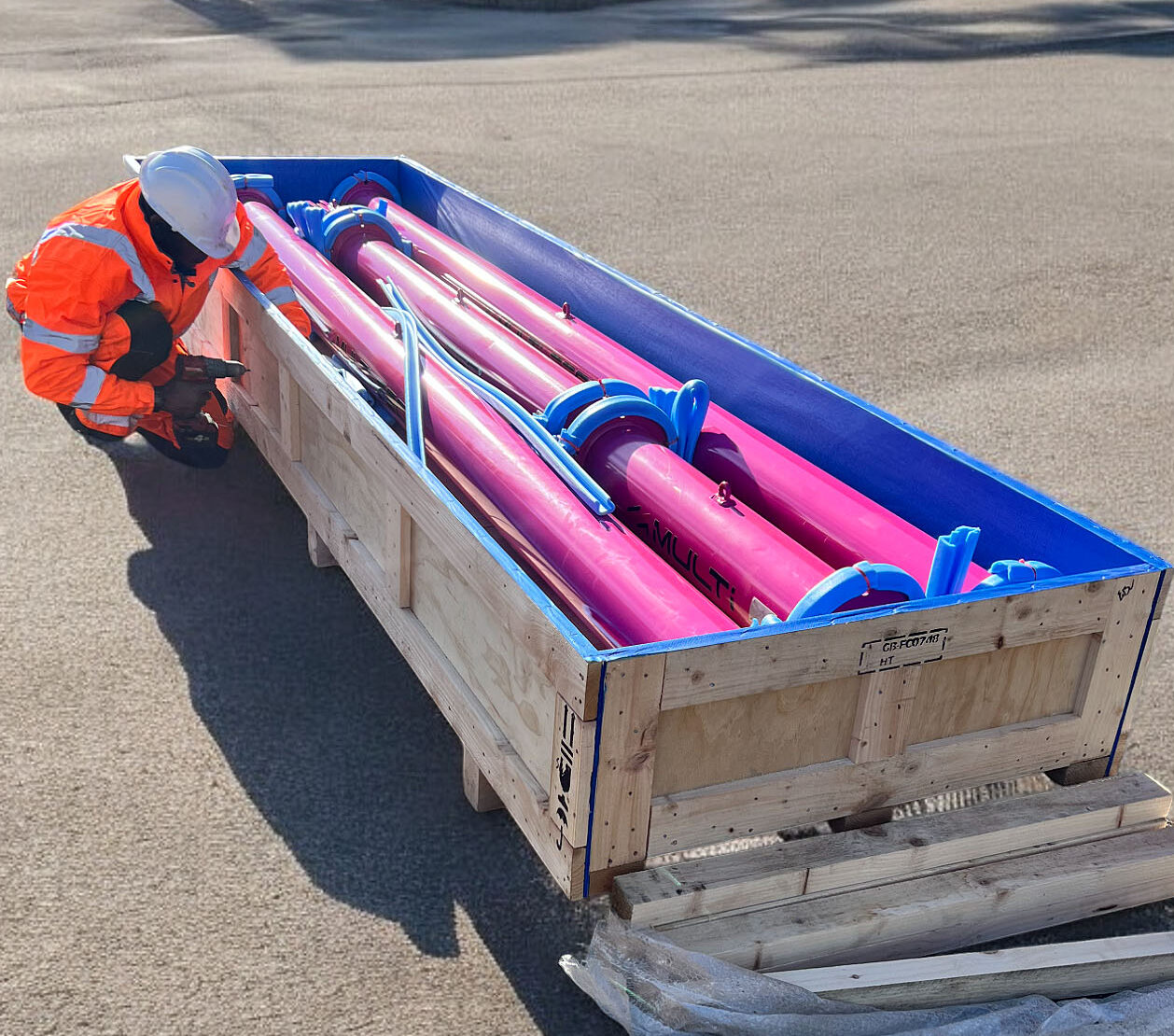
A pre-use spreader-beam check should confirm that the equipment is correctly identified, visibly free from damage that could affect safety, assembled in the approved configuration and connected using compatible rigging. A pre-use check does not replace any statutory thorough examination, manufacturer inspection requirement or project-specific inspection scheme.
Before Use
Practical Spreader Beam Checks
- Identification: confirm the beam or modular system is clearly identified and the required WLL/configuration data is available.
- Beam condition: look for visible deformation, cracks, impact damage, heavy corrosion, damaged coatings or other deterioration that could affect integrity.
- Lifting points: inspect lugs, holes and connection areas for visible damage, elongation, distortion or wear.
- Bolted or pinned connections: confirm the correct components are installed, complete and secured in accordance with the manufacturer instructions.
- End units and struts: check that modular components match the planned configuration and are free from obvious damage.
- Shackles and slings: use compatible, correctly rated rigging suitable for the connection geometry and lift plan.
- Configuration: verify span, component set and sling arrangement against the applicable load chart or approved project data.
- Documentation: confirm any required inspection, examination, certification or project records are current and available.
Remove From Service
Stop If Condition Or Configuration Is Uncertain
Do not continue with a lift if equipment identification is missing, the approved configuration cannot be confirmed, or there is visible damage that could affect safe use. Quarantine the equipment and refer it to the responsible competent person or manufacturer for assessment.
Modular equipment must not be assembled from visually similar components unless those components are approved as part of the same system and configuration. Capacity depends on the complete assembly, not just the main beam section.
Operators should follow the manufacturer instructions, project inspection plan and any statutory competent-person examination requirements that apply to the equipment and jurisdiction.
After Assembly
Check The System As A Complete Lifting Arrangement
After a modular spreader beam is assembled, inspect the whole lifting system before load is applied. Confirm that the beam is assembled to the planned span, all connections are complete, the intended top and bottom rigging is fitted and the lift plan matches the approved load data.
If any change is made to span, slings, shackles, lower lifting points or crane-hook geometry, re-check the configuration before proceeding.
Frequently Asked Questions
Common Questions
What should be checked before using a spreader beam?
Check identification and WLL, the beam and end units, lifting lugs, pins or bolts, shackles and slings, the approved configuration, visible damage, corrosion or deformation, and that the planned lift matches the applicable load data.
Does a pre-use check replace a thorough examination?
No. A pre-use check is an operational check before use. It does not replace statutory examination, competent-person inspection or any examination scheme applicable to the equipment.
What should I do if a beam is damaged or identification is unclear?
Do not use the equipment until its status has been confirmed by the responsible competent person or manufacturer. Do not guess capacity or continue with an unverified configuration.
Engineering Support
Need Help With A Real Lift?
Send the load, span, lifting points, available headroom and any drawings. Multisec can review the requirement and identify the most suitable standard or bespoke route.