Engineering Guide
Lifting Beam Calculations
A customer-facing guide to the information engineers use when assessing a lifting beam, including load weight, centre of gravity, lifting points, span, headroom, rigging geometry and project requirements.
By Multisec · Purchasing and engineering guidance
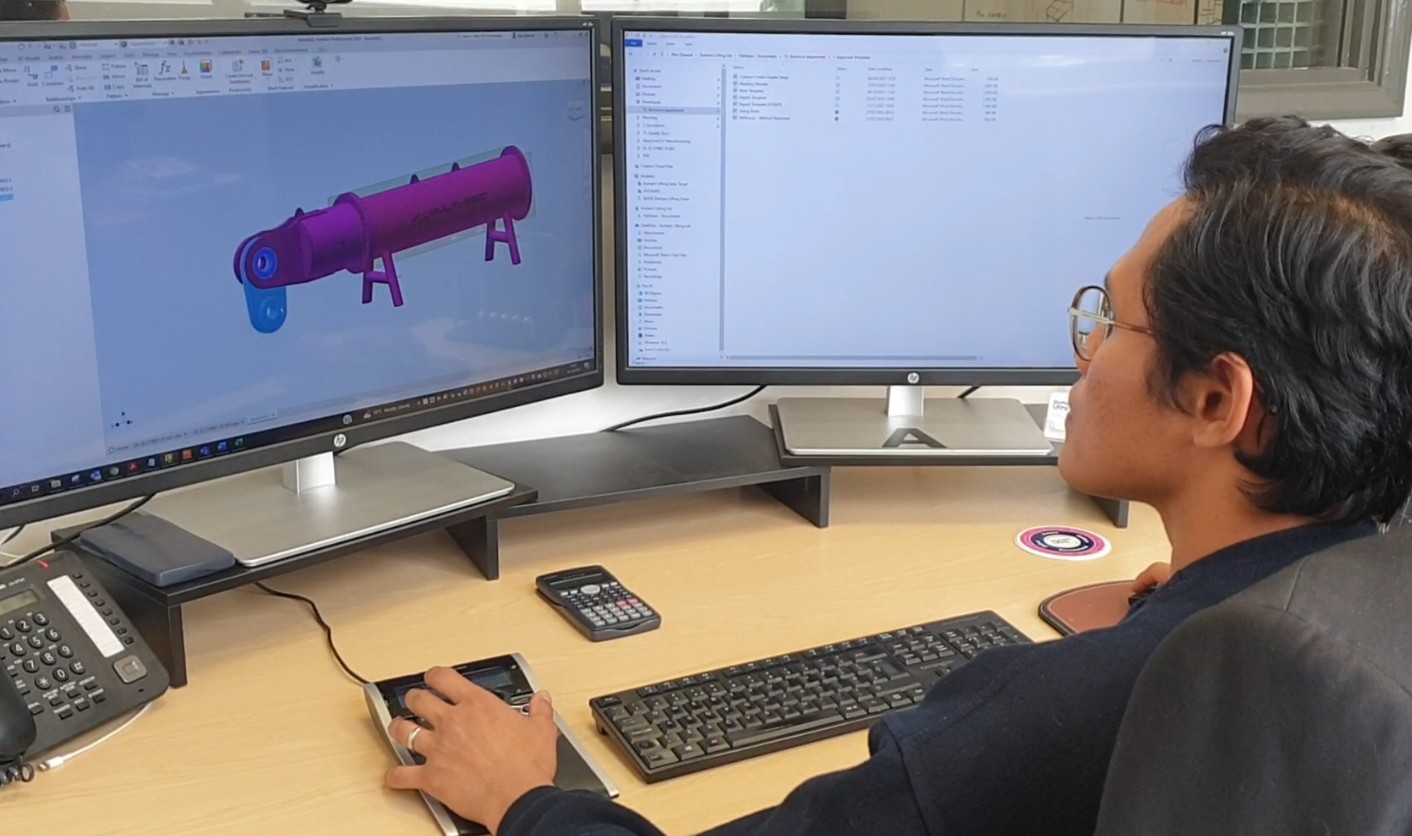
Lifting beam calculations are not based on load weight alone. The engineering review considers how the load is introduced into the beam, how reactions are shared between lifting points, the beam span, upper connection, centre of gravity, local connection loads and the design requirements for the project.
What A Lifting Beam Calculation Is Trying To Establish
The purpose of a lifting-beam engineering assessment is to show that the proposed beam, connections and lifting arrangement are suitable for the loads that can occur in the intended configuration. The headline load weight is only one input.
The engineer also needs to understand where that load acts, how it is shared between lifting points, the distance between those points, the upper connection arrangement and any project conditions that influence the design basis.
This guide explains the information used during that review. It is not a substitute for a project-specific design calculation or approved technical data.
Inputs Needed Before The Beam Can Be Assessed
| Input | Why it matters |
|---|---|
| Load weight / required WLL | Defines the basic lifting requirement and the load level the equipment has to support. |
| Load dimensions | Helps establish span, lifting-centre positions and clearance around the load. |
| Centre of gravity | An offset centre of gravity can produce unequal reactions at the lower lifting points. |
| Lifting-point locations | The number, spacing and position of load connections determine how forces enter the beam. |
| Upper connection | Hook, sling or upper-lug geometry changes the force path and available headroom. |
| Headroom | Available hook-to-load height can determine whether a lifting beam, spreader arrangement or bespoke solution is practical. |
| Project requirements | Environment, operating conditions, documentation and certification requirements can affect the design and verification route. |
Load Reactions And Centre Of Gravity
When a load is supported at more than one lower lifting point, the reactions are not automatically equal. The actual distribution depends on the load geometry, centre of gravity and lifting-point positions.
If the centre of gravity is offset, one lifting point can carry more load than another. That is why a total weight divided equally between the number of lifting points is not a reliable basis for selecting or designing a beam unless the load distribution has been established.
Where the centre of gravity is uncertain, provide drawings, component weights or other available information so the requirement can be reviewed before equipment is selected.
What The Engineering Review Considers
Depending on the beam and application, the design review can include bending, shear, local connection loads, deflection, stability and the forces at lifting lugs or other connection points. The design basis and checks must match the intended configuration and project requirements.
For a standard Multisec product, use the approved model-specific technical data for the selected span and arrangement. For a requirement outside the standard range, a bespoke design route may be needed.
Design Calculation And Proof Load Testing Are Different
A proof load test and an engineering design calculation serve different purposes. A test does not replace the need to establish a suitable design, and a calculation does not remove the need for any testing, inspection or certification required for the equipment or project.
The appropriate verification route should be defined for the equipment being supplied and the project requirements.
What To Send Multisec
For a lifting-beam enquiry, send the load weight, overall dimensions, lifting-point positions, available headroom, known centre-of-gravity information, crane or upper connection arrangement, project date and any drawings or lift plans available.
You do not need to calculate the beam yourself before enquiring. Clearly identify estimates and unknown information, and the Multisec team can review whether the requirement is best served by a standard Multi-Point beam or a bespoke lifting solution.
Frequently Asked Questions
Common Questions
Can I calculate a lifting beam from the load weight alone?
No. Load weight is only one input. The lifting-point positions, centre of gravity, span, upper connection, headroom and intended configuration also affect the forces that the beam and its connections must carry.
Are the reactions at each lifting point always equal?
No. Reactions depend on the centre of gravity and the geometry of the load and lifting points. An offset centre of gravity can create unequal reactions.
Does proof load testing replace a lifting beam calculation?
No. Design verification and proof load testing are different parts of the equipment assurance process. The required route depends on the equipment and project requirements.
What should I send for a lifting beam design review?
Send the load weight, dimensions, lifting-point locations, centre-of-gravity information if known, available headroom, upper connection or crane arrangement, project requirements and any drawings or lift plans.
Engineering Support
Need Help With A Real Lift?
Send the load, span, lifting points, available headroom and any drawings. Multisec can review the requirement and identify the most suitable standard or bespoke route.