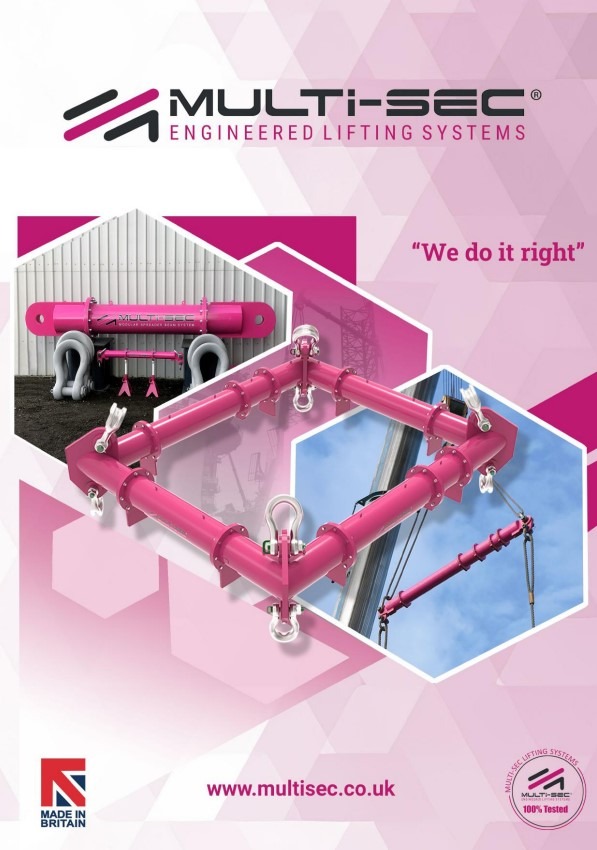
Lifting Frame Guide
What Is A Lifting Frame?
A practical guide to lifting frames, spreader frames and adjustable frame systems, including when a four-point frame is preferable to a beam arrangement.

A lifting frame is a below-the-hook structure used to support a load from multiple lifting points while controlling the geometry between the crane and the load. Frames are commonly used where four-point support, rectangular load geometry or controlled load distribution is more suitable than a single beam.
How It Works
A Frame Controls Geometry In Two Directions
A lifting frame is used when the load cannot be treated as a simple two-point beam lift. By creating a structure with more than one beam axis, the frame can hold lifting points apart in both length and width while transferring the load into the crane rigging above.
This is especially useful for rectangular modules, plant skids, fabricated structures and loads with four corner lifting points. The frame geometry helps keep lower rigging aligned with the intended lifting points and can reduce unwanted inward sling forces on the load.
| Equipment | Typical geometry | Common reason to use it |
|---|---|---|
| Lifting beam | Linear beam with one or more lower pick points | Restricted headroom or controlled support along one axis |
| Spreader beam | Linear spreader member with top slings | Long or wide loads where load distribution and sling geometry matter |
| Lifting / spreader frame | Multi-member structure supporting points in two directions | Four-corner or rectangular lifting geometry |
| Adjustable frame | Frame with configurable or movable lifting interfaces | Changing module dimensions or repeated lifts with different geometry |
Main Types
Modular, Adjustable And Bespoke Frames
Modular spreader frames
Modular frames use approved beam sections and corner connections to create a four-point lifting arrangement. They are useful where a repeatable system must cover more than one approved size or configuration.
Adjustable lifting frames
Adjustable frames are designed where lifting centres or module dimensions can vary. Adjustment may be provided through engineered interfaces, movable lifting points or project-specific modularity. The final configuration still needs to remain within the approved design and load data.
Bespoke lifting frames
For unusual geometry, very high capacity, non-symmetrical loads or project-specific crane arrangements, a bespoke frame may be required. In these cases the frame is engineered around the actual load path, lifting-point reactions, headroom and operating environment.
Selection Inputs
What Engineers Need Before Selecting A Frame
- Total load weight and required Working Load Limit.
- Length and width between the lower lifting points.
- Number, location and orientation of the load lifting points.
- Known or estimated centre of gravity and any asymmetric loading.
- Available headroom from crane hook to load.
- Crane-hook arrangement, upper rigging and any tandem-lift requirement.
- Operating environment, project documentation and certification requirements.
The same four-point footprint can produce very different member loads if the centre of gravity, upper sling geometry or lower-point reactions change. Final selection must use approved configuration data or project engineering.
Frequently Asked Questions
Common Questions
What is the difference between a lifting frame and a lifting beam?
A lifting beam is generally a linear member supporting lower lifting points along one main axis. A lifting frame creates a wider structure with multiple members and is often used to support four corners or lifting points in two directions.
When is a four-point lifting frame useful?
A four-point frame is useful where a rectangular or wide load needs controlled support at four lifting points, particularly when load stability and lifting-point geometry are important.
Can a lifting frame be modular?
Yes. Modular spreader frames can use configurable beam sections and corner connections so the frame can be adapted to approved dimensions and lifting configurations.
Engineering Support
Need Help With A Real Lift?
Send the load, span, lifting points, available headroom and any drawings. Multisec can review the requirement and identify the most suitable standard or bespoke route.