
Spreader Beams for Heavy Lifting Operations
A spreader beam is a below-the-hook lifting device designed to distribute loads safely between multiple lifting points during crane lifting operations. Spreader beams are commonly used when lifting heavy, oversized or unstable loads where controlled load distribution and lifting stability are essential.
By using slings connected to lifting lugs at each end of the beam, a spreader beam helps maintain a controlled lifting arrangement while reducing stress on the load. Spreader beams are widely used across offshore wind, heavy engineering, infrastructure construction, marine operations and manufacturing.
This guide explains how spreader beams work, when they are used, the different types available, and how engineered and modular spreader beam systems support safe heavy lifting operations.
What is a Spreader Beam?
A spreader beam is a lifting beam suspended from a crane by two or more top slings connected to lifting points at each end of the beam. The load is attached beneath the beam using vertical slings, shackles or other lifting accessories.
This arrangement transfers compressive forces through the beam, allowing the lifting load to be distributed between multiple lifting points.
Spreader beams are commonly used when:
lifting points are spaced apart
the load needs controlled support
lifting stability is important
a simple vertical lifting arrangement is not suitable
Because they distribute forces across the beam, spreader beams are widely used for large fabricated structures, machinery, offshore components and infrastructure elements.
How Spreader Beams work
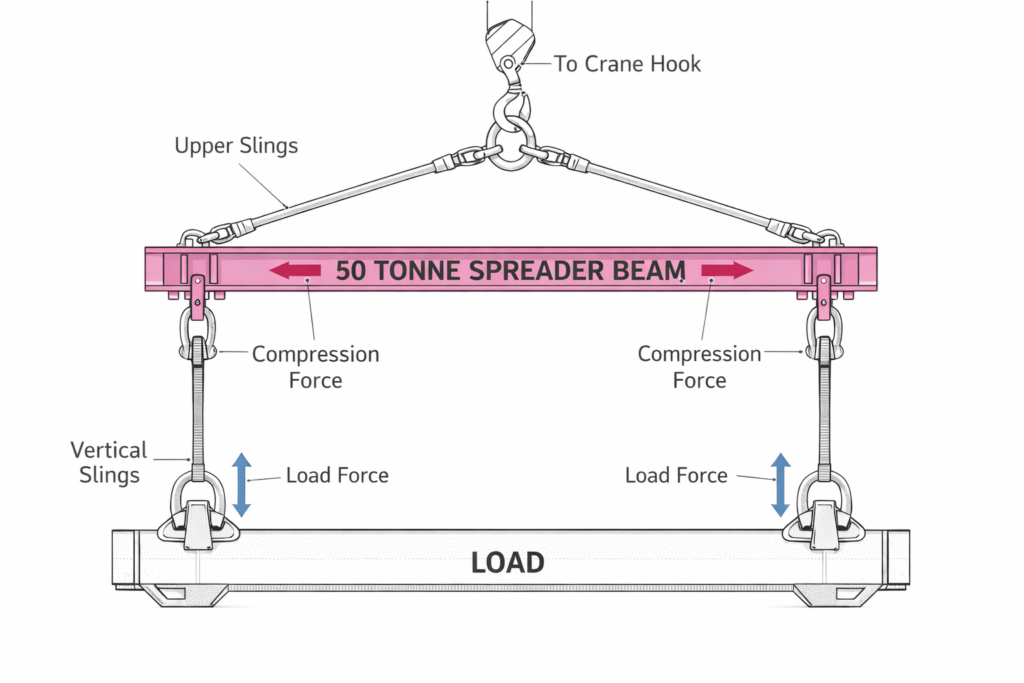
A spreader beam works by creating a lifting arrangement where the crane hook supports the beam through angled slings above, while the load is supported from below.
In a typical configuration:
the crane connects to the beam using two slings
those slings connect to lifting lugs at either end of the beam
the load is attached to lifting points beneath the beam
the beam distributes compressive forces between the lifting points
This helps maintain load stability and prevents excessive loading at individual lifting points on the load.
For many heavy lifting operations, a spreader beam provides a safer and more controlled solution than lifting directly from the crane hook.
Types of Spreader Beams

Modular spreader beams use interchangeable struts and end units to create different lifting spans and lifting configurations. This gives engineers a flexible lifting system that can be adapted across multiple projects.
Modular systems are commonly used where lifting requirements change between projects or where different spans are needed.
Fixed spreader beams are manufactured to a set span and capacity for a specific lifting arrangement. They are often used where the same lift or load type is repeated regularly.
Adjustable spreader beams allow some variation in lifting point position or beam configuration. These are used where flexibility is required but a full modular system is not necessary.
Heavy lift spreader beams are designed for very large lifting operations involving high capacities, long spans and complex load geometries. These are commonly used in offshore, infrastructure and major fabrication projects.
When are Spreader Beams used?
Spreader beams are used when a lifting operation requires the load to be supported from multiple points while maintaining a controlled and stable lifting arrangement.
Typical spreader beam applications include:
offshore wind turbine components
heavy fabricated steel structures
bridge sections and infrastructure components
marine and port equipment
large machinery and industrial assemblies
modular structures and plant equipment
Where loads are wide, unstable or have multiple lifting points, spreader beams provide a safe and practical lifting solution.
Spreader Beams vs Lifting Beams
Although the terms are sometimes used interchangeably, spreader beams and lifting beams work differently.
| Feature | Spreader Beam | Lifting Beam |
|---|---|---|
| Top lifting connection | Two or more slings | Single central lifting point |
| Primary force in beam | Compression | Bending |
| Best used for | Wide loads and spaced lifting points | Restricted headroom lifting |
| Lifting height required | More headroom required | Less headroom required |
Spreader beams are typically used when lifting points are spaced apart and load stability is critical. Lifting beams are more commonly used where crane clearance is limited.
Spreader Beams Design Considerations
The design of a spreader beam must be based on the lifting arrangement, the load geometry and the environment in which it will be used.
Important design factors include:

Load Distribution
The beam must distribute loads safely between lifting points without overloading any part of the structure or rigging arrangement.
Sling Angles
The angle of the top slings affects the forces acting on the beam and the rigging. These forces must be considered carefully during design.
Beam Span
Longer beam spans increase structural demand and may require heavier sections or different configurations.
Lifting Points
The beam must align correctly with the load lifting points to maintain balance and control during the lift.
Standards and Certification
Engineered spreader beams may be designed and manufactured to recognised standards such as BS EN 13155 and DNV-ST-0378.
Spreader Beam Capacity Range
Spreader beams are available in a wide range of capacities depending on the lifting application.
| Capacity | Typical Use |
|---|---|
| 10 tonne spreader beam | light fabrication and workshop lifting |
| 25 tonne spreader beam | manufacturing and construction lifting |
| 50 tonne spreader beam | heavy fabrication and offshore lifting |
| 100 tonne spreader beam | infrastructure and major structural lifts |
| 200+ tonne spreader beam | heavy lift and offshore projects |
A modular spreader beam system allows multiple capacities and spans to be achieved using interchangeable components.
Multisec Modular Spreader Beam Systems
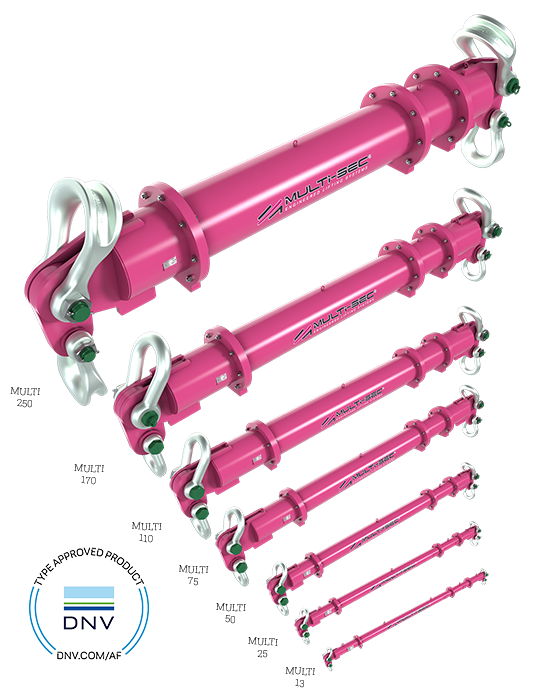
For many industries, a modular spreader beam system provides the most practical and cost-effective solution.
Instead of requiring a separate beam for every lifting arrangement, modular systems allow engineers to assemble beam sections into the required span and configuration.
Benefits of modular spreader beams include:
flexible beam configurations
reduced equipment inventory
suitability for multiple lifting projects
efficient transport and storage
support for a wide range of capacities and spans
Multisec modular spreader beams are designed for lifting operations across heavy engineering, infrastructure, offshore wind and marine industries.
Explore our lifting equipment ranges:
Industries That Use Spreader Beams
Spreader beams are used across many sectors where controlled heavy lifting is required.
Offshore Wind
Used for monopiles, transition pieces, tower sections and other heavy offshore components.
Marine Construction
Used for subsea frames, marine infrastructure and large fabricated assemblies.
Heavy Engineering
Used to lift large steel fabrications, machinery and plant equipment.
Infrastructure Projects
Used for bridge sections, concrete structures and structural steel assemblies.
These industries rely on engineered lifting equipment to ensure safe lifting operations and reliable load control.
Frequently Asked Questions
A spreader beam is used to distribute loads safely between multiple lifting points during crane lifting operations.
A spreader beam is suspended from a crane using slings connected to lifting points at each end of the beam. The load is attached beneath the beam, allowing the beam to distribute compressive forces between lifting points.
A spreader beam uses top slings connected to each end of the beam and carries compressive forces, while a lifting beam connects to a single central lifting point and carries bending forces.
Spreader beams are used in offshore wind, marine construction, infrastructure, heavy engineering and manufacturing.
Need Help Selecting the Right Spreader Beam?
If you need help selecting the right spreader beam for your lifting operation, our engineering team can help specify the most suitable configuration for your load, lifting points and operating environment.
Explore our Modular Spreader Beam range or contact Multisec for expert lifting support.