Testing Guide
Lifting Beam Proof Load Testing
What proof load testing verifies, how a controlled test is prepared and documented, and what project teams should check before a lifting beam is released for use.
By Multisec · Purchasing and engineering guidance
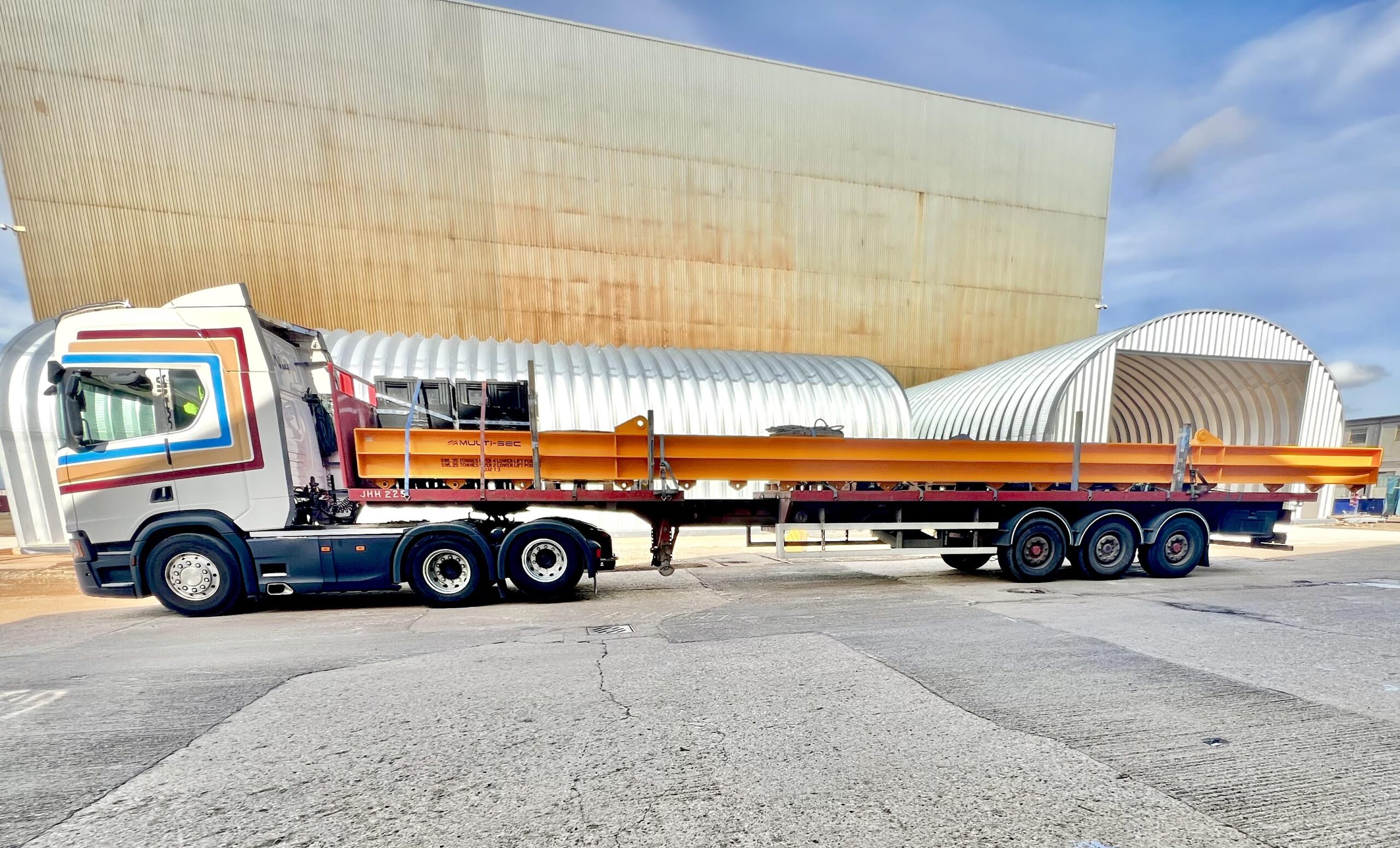
Proof load testing is a controlled verification step used to demonstrate that lifting equipment can withstand a specified test load without unacceptable permanent deformation or damage. The required test load, method and acceptance criteria depend on the equipment design, applicable standard, certification route and project requirements.
Purpose
What A Proof Load Test Actually Verifies
A proof load test is not a substitute for design. It is a controlled verification step carried out after the equipment has been designed and manufactured, or as required by an approved examination or project procedure.
The purpose is to apply the specified test condition in a controlled environment and then assess the equipment for the acceptance criteria defined by the relevant test procedure. The exact test load and method must come from the applicable design, standard, certification route or project requirement.
The Working Load Limit is the maximum working load for the approved configuration. A proof test is a verification event performed to a specified test requirement. Do not infer one from the other without the approved technical basis.
Typical Sequence
From Test Plan To Release
- Identify the equipment and configuration. Confirm serial or product identification, drawings, WLL, span and the test configuration.
- Review the test requirement. Establish the approved load, application points, test method, instrumentation and acceptance criteria.
- Inspect before testing. Check the beam, lifting points, welds, connections and rigging required for the test setup.
- Apply the load in a controlled manner. The test facility applies the required load using a suitable test arrangement and monitors the equipment as specified.
- Unload and inspect. The equipment is checked after the test for damage, unacceptable deformation or other non-conformity.
- Record the result. Test and inspection records are linked to the equipment and project documentation as required.
Project Documentation
What A Purchaser Should Confirm
- The lifting beam is clearly identified and traceable to the relevant documentation.
- The tested configuration matches the configuration being supplied or approved for use.
- The test requirement and acceptance criteria are defined, not assumed.
- Post-test inspection and any dimensional or NDT requirements have been completed where specified.
- Certification, test records and operating information required by the project are supplied.
Multisec designs and manufactures lifting equipment with access to in-house proof load testing at Britannia Testhouse. For project-specific equipment, the required verification route is agreed around the design and project requirements.
Frequently Asked Questions
Common Questions
Is the proof test load the same as the WLL?
No. WLL is the rated working limit for the approved configuration. A proof test is a controlled verification test performed to an applicable procedure and test requirement.
Does every lifting beam use the same proof load factor?
No. The required test regime depends on the design, standard, certification route and project specification. Use the approved test procedure rather than assuming one factor applies to every beam.
What documentation should be retained after testing?
The project documentation should identify the equipment, test arrangement, applied test requirement, inspection result and relevant certification or test records appropriate to the product and project.
Engineering Support
Need Help With A Real Lift?
Send the load, span, lifting points, available headroom and any drawings. Multisec can review the requirement and identify the most suitable standard or bespoke route.