
50 Tonne Spreader Beam Guide
Design, Certification and Applications in Marine Lifting
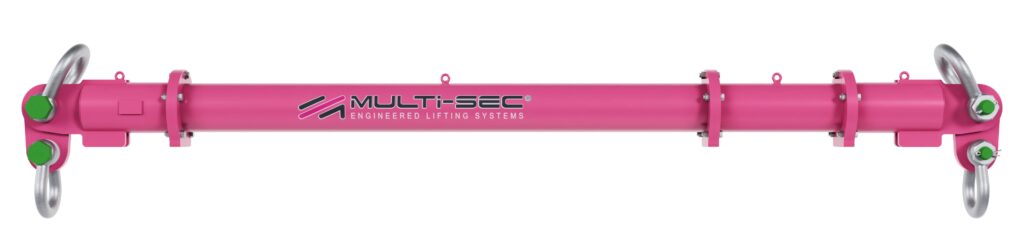
A 50 tonne spreader beam (often referred to as a 50t spreader beam or 50 ton spreader beam) is a below-the-hook lifting device designed to safely distribute loads between multiple lifting points during heavy lifting operations.
These beams are commonly used when lifting large structures, heavy machinery, offshore wind components, and fabricated steel assemblies where controlled load distribution is essential.
By spreading the lifting forces across multiple points, spreader beams help maintain load stability, reduce structural stress on the lifted object, and prevent excessive sling angles during crane operations.
Spreader beams are widely used across industries such as offshore wind, heavy engineering, infrastructure construction, and marine operations.
What Is a 50 Tonne Spreader Beam?
A 50 tonne spreader beam is engineered with a working load limit of up to 50 tonnes and is designed to distribute lifting forces across multiple lifting points.
Unlike lifting beams, which typically connect to a single lifting point, spreader beams are suspended from the crane using two slings attached to lifting lugs at each end of the beam. The load is then connected beneath the beam using vertical slings or shackles.
This configuration transfers compressive forces through the beam, allowing loads to be evenly distributed between lifting points.
Typical loads lifted using a 50 tonne spreader beam include:
large steel fabrications
offshore wind turbine components
prefabricated structural modules
heavy equipment and machinery
infrastructure components
Typical Configuration of a 50 Tonne Spreader Beam
| Feature | Typical Specification |
|---|---|
| Working load limit | Up to 50 tonnes |
| Top lifting connection | Two crane slings |
| Load connection | Vertical slings or shackles |
| Load distribution | Compressive force through beam |
| Typical industries | Offshore wind, infrastructure, heavy fabrication |
Why Spreader Beams Are Used for 50 Tonne Lifts
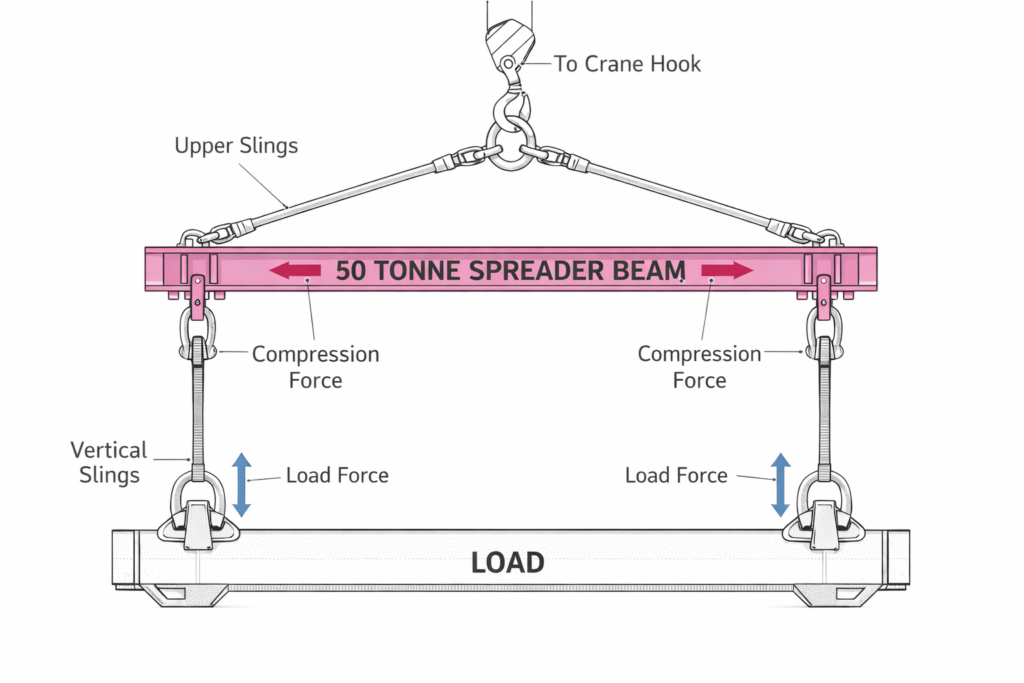
When lifting loads around the 50 tonne capacity range, controlling load distribution becomes critical to ensure a safe lift.
Spreader beams are often used because they help:
distribute loads evenly between lifting points
reduce stress on the lifted structure
improve load stability during lifting
minimise sling angles during crane operations
support safe multi-point lifting arrangements
Without a spreader beam, lifting heavy loads with widely spaced lifting points could create unsafe sling angles or uneven load distribution.
Typical Applications
Offshore Wind Projects
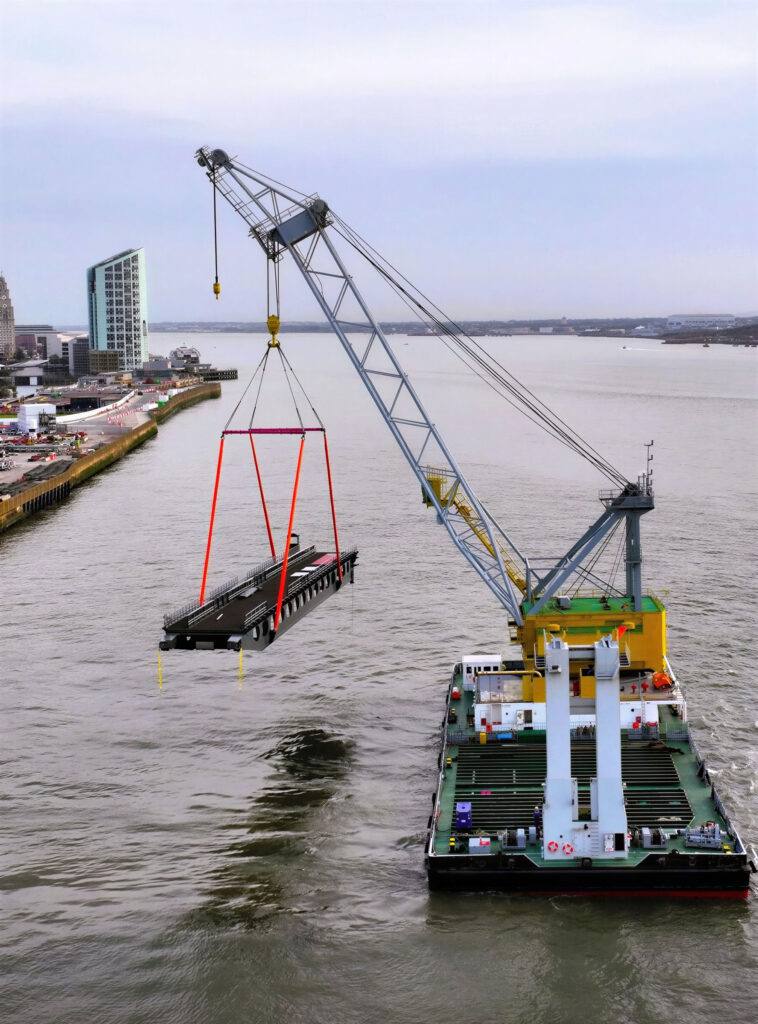
Spreader beams are commonly used to lift turbine components, foundations, and large offshore structures during installation operations.
Heavy Manufacturing
Large fabricated steel assemblies or industrial components often require spreader beams to maintain stability during lifting.
Infrastructure Construction
Bridge sections, structural frames, and prefabricated modules are frequently lifted using spreader beam arrangements.
Marine and Port Operations
Ports and shipyards regularly use spreader beams when lifting heavy marine equipment and prefabricated structures.
Typical Spreader Beam Capacities
Spreader beams are manufactured in a wide range of capacities depending on the lifting application. While this guide focuses on 50 tonne spreader beams, lifting beams are commonly engineered in many other working load limits.
Typical spreader beam capacities include:
| Capacity | Typical Use |
|---|---|
| 10 tonne spreader beam | Light fabrication lifting |
| 25 tonne spreader beam | Manufacturing and construction |
| 50 tonne spreader beam | Heavy fabrication and offshore lifting |
| 100 tonne spreader beam | Infrastructure and offshore structures |
| 200 tonne spreader beam | Major heavy lifting operations |
Modular spreader beam systems allow engineers to configure lifting beams across multiple capacities while maintaining safe load distribution.
Design Considerations for 50 Tonne Spreader Beams

Load distribution
The beam must distribute loads evenly across lifting points without overstressing individual lifting connections.
Structural strength
The beam must withstand compressive forces generated by sling angles during lifting operations.
Span Length
The span between lifting points affects beam design, as longer spans increase structural loading on the beam.
Lifting Configuration
Engineers must consider crane capacity, lifting geometry, and load centre of gravity when designing the lifting arrangement.
Modular Spreader Beam Systems
Many lifting operations require flexibility to accommodate different load sizes and lifting configurations.
Modular spreader beam systems allow engineers to configure lifting beams with different spans and lifting arrangements using interchangeable beam sections.
This approach allows a single modular lifting system to support a wide range of lifting operations, including loads around the 50 tonne capacity range.
Multisec modular spreader beams provide flexible lifting solutions for complex lifting projects across industries including offshore energy, infrastructure and heavy engineering.
Explore our lifting equipment ranges:
Related Lifting Guides
Frequently Asked Questions
A 50 tonne spreader beam is used to safely distribute loads between multiple lifting points when lifting heavy structures, machinery, or fabricated components.
Spreader beams transfer compressive forces through the beam while distributing lifting forces between multiple lifting points
Yes. Modular spreader beam systems can often be configured to support lifting operations in the 50 tonne range depending on beam configuration and span.