
Spreader Beam vs Lifting Beam
Understanding the Difference Between Spreader Beams and Lifting Beams
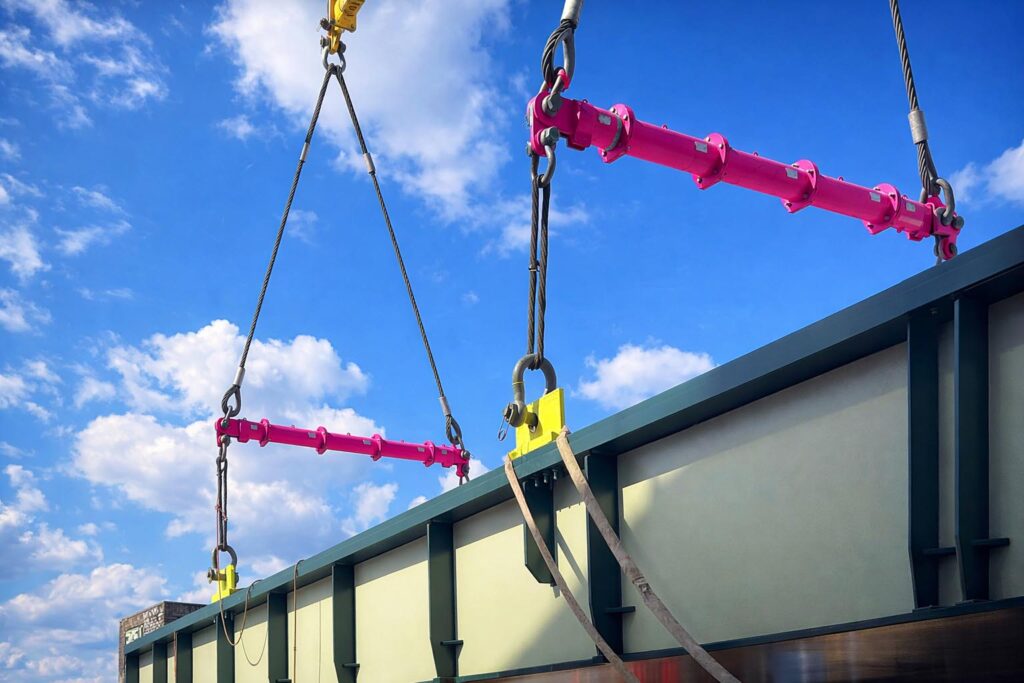
When planning a lifting operation, selecting the correct lifting equipment is essential to ensure safe load control and stability. Two commonly used pieces of lifting equipment are spreader beams and lifting beams. While both are designed to assist with lifting heavy loads, they function differently and are suited to different lifting configurations.
Understanding the difference between a spreader beam and a lifting beam helps engineers, rigging specialists and project planners choose the correct solution for their lifting requirements.
Spreader Beam vs Lifting Beam – Quick Comparison
| Feature | Spreader Beam | Lifting Beam |
|---|---|---|
| Top connection | Two slings to crane hook | Single central lifting point |
| Load forces | Compression in the beam | Bending in the beam |
| Headroom | Requires more headroom | Ideal for restricted headroom |
| Typical use | Wide loads | Controlled multi-point lifts |
What is a Spreader Beam?
A spreader beam is a type of lifting device designed to spread the load between multiple lifting points using angled slings. The beam itself is typically suspended from the crane hook by two slings connected to lifting lugs at each end of the beam.
The load is attached to lifting points beneath the beam, usually using vertical slings or shackles.
Because the lifting slings connected to the crane are angled, compressive forces are transferred into the beam, allowing the beam to distribute the load between the lifting points.
Key characteristics of Spreader Beams
- Suspended from the crane by two or more slings
- Forces in the beam are primarily compressive
- Used to distribute loads across multiple lifting points
- Commonly used for wide loads or structures
Spreader beams are frequently used in industries such as offshore wind, heavy engineering, marine operations and infrastructure construction.
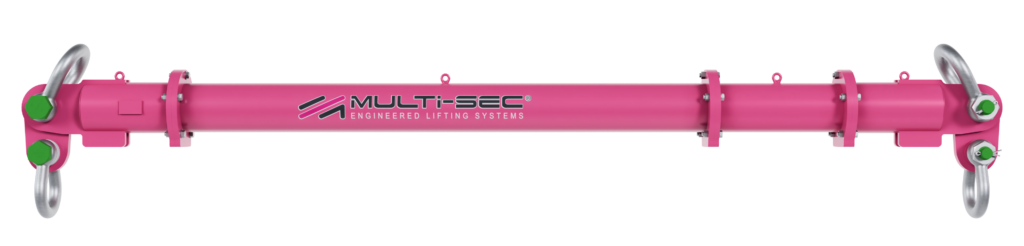
Explore our modular spreader beam systems designed for flexible lifting configurations.
What is a Lifting Beam?
A lifting beam differs from a spreader beam in that it is typically lifted from a single central lifting point. The beam connects directly to the crane hook or lifting device, and the load is attached beneath the beam through multiple lifting lugs.
Because the lifting point is positioned above the beam, the beam experiences bending forces rather than compression.
Lifting beams are often used where headroom is restricted or where a simple and stable lifting arrangement is required.
Key characteristics of Lifting Beams
- Single central lifting point
- Beam experiences bending forces
- Load attached to multiple bottom lifting lugs
- Ideal for restricted headroom lifting situations
Many lifting beams are designed with multiple lifting points along the underside, allowing engineers to adapt the lifting configuration depending on the load geometry.
Explore our multi-point lifting beam solutions for controlled lifting operations.
Key Differences Between Spreader Beams and Lifting Beams
| Feature | Spreader Beam | Lifting Beam |
|---|---|---|
| Top connection | Two or more slings to crane | Single central lifting point |
| Load forces | Compression forces in beam | Bending forces in beam |
| Headroom required | Requires more headroom | Suitable for restricted headroom |
| Typical use | Wide loads or structures | Controlled multi-point lifting |
Both lifting solutions provide safe load distribution, but the correct choice depends on the lifting geometry and available space.
When Should a Spreader Beam Be Used?
Spreader beams are typically used when lifting loads that require multiple lifting points spaced apart. They are particularly useful when the load needs to remain stable during lifting operations.
Typical applications include:
- Lifting large fabricated structures
- Offshore wind turbine components
- Marine and port lifting operations
- Infrastructure construction projects
- Handling large steel structures
Spreader beams allow the load to remain balanced while distributing forces evenly between lifting points.
When Should a Lifting Beam Be Used?
Lifting beams are often used when vertical space is limited or when a controlled multi-point lifting configuration is required.
Typical applications include:
- Lifting machinery and equipment
- Manufacturing operations
- Handling large components with defined lifting points
- Situations where headroom is restricted
Because lifting beams connect directly to the crane hook, they provide a simple and efficient lifting arrangement for many lifting tasks.
Conclusion
Both spreader beams and lifting beams are essential pieces of lifting equipment used across a wide range of industries. While spreader beams are typically used to distribute loads between multiple lifting points using angled slings, lifting beams are commonly used where a single central lifting point is required.
Understanding the differences between these lifting solutions helps engineers select the most suitable equipment for safe and efficient lifting operations.
Modular Lifting Solutions
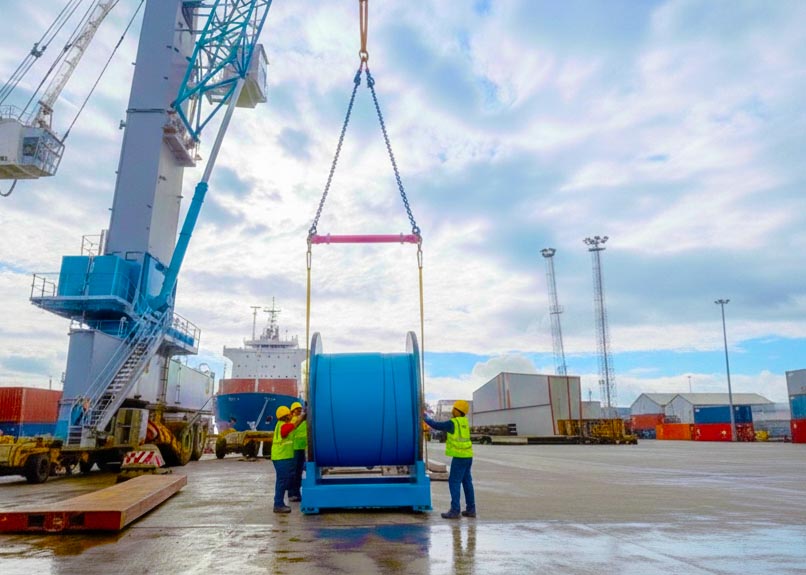
Need Help Selecting the Right Lifting Beam?
Modern lifting operations often require flexible lifting equipment that can be adapted to different load sizes and lifting configurations. Modular lifting systems allow engineers to configure lifting beams or spreader beams depending on the specific requirements of the lift.
Multisec modular lifting equipment provides adaptable lifting solutions for industries including offshore energy, infrastructure and heavy manufacturing.
Explore our lifting equipment ranges:
Frequently Asked Questions
The main difference between a spreader beam and a lifting beam is the type of force acting on the beam. A spreader beam transfers compressive forces through the beam using angled slings, whereas a lifting beam transfers loads through bending forces from a single lifting point.
Spreader beams are commonly used when lifting wide loads where the lifting points are spaced apart. They distribute loads across multiple points while keeping sling angles controlled.
Lifting beams are typically used when headroom is restricted or when a load requires multiple bottom lifting points.