Spreader Beam vs Lifting Beam
Understanding the Difference Between Spreader Beams and Lifting Beams
Spreader beams and lifting beams are both below-the-hook lifting devices, but they are designed to handle loads in different ways.
The key difference is how force is applied to the beam. A spreader beam is typically loaded in compression, while a lifting beam is primarily loaded in bending.
Understanding this difference is critical when selecting the correct lifting equipment for a safe and controlled lifting operation.
What is a Spreader Beam?
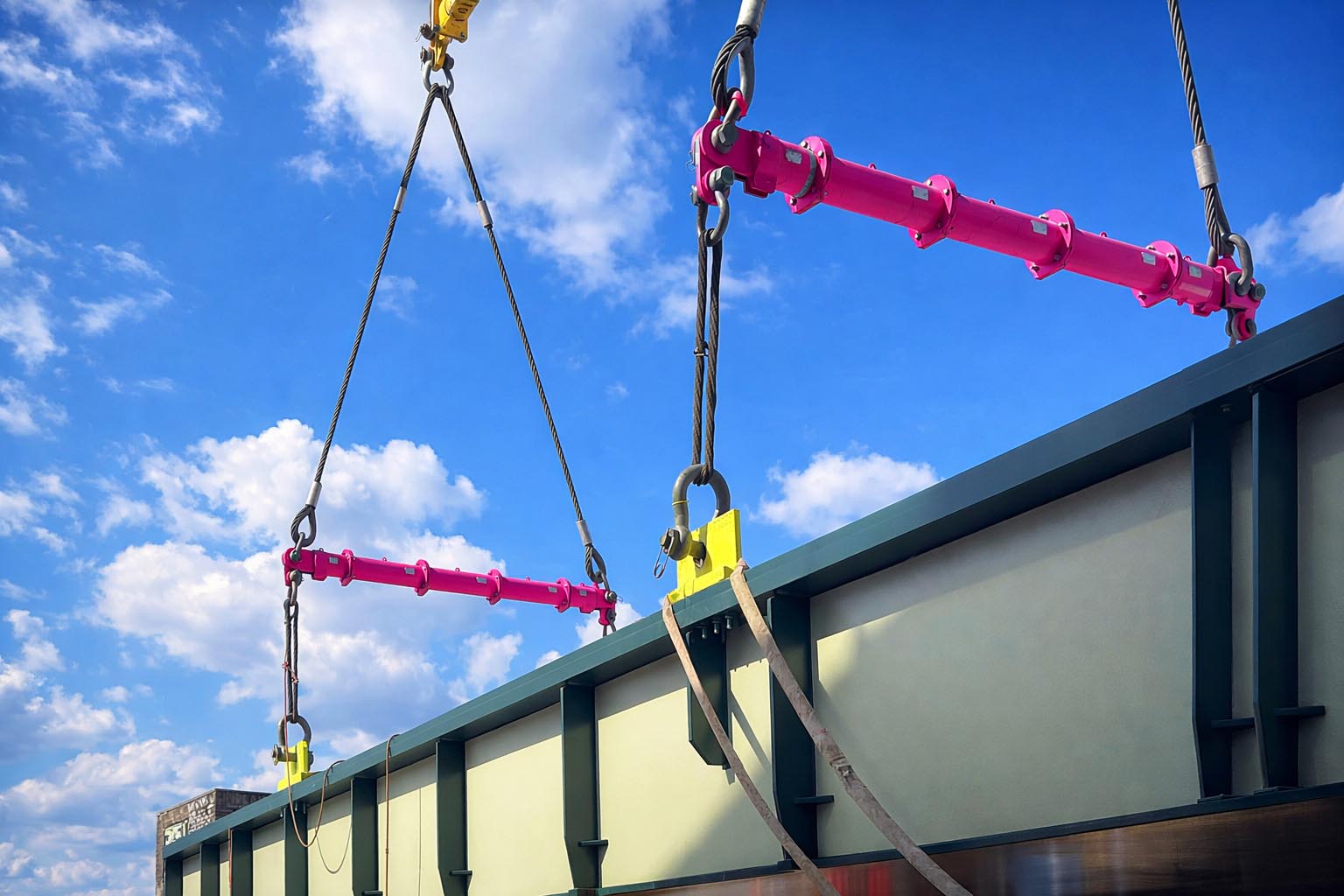
A spreader beam is a lifting device designed to distribute loads across multiple lifting points. The beam is typically suspended from the crane hook using two or more top slings connected to lifting points at each end.
Because the slings are angled, the load is transferred into the beam as compressive force, allowing the load to be distributed evenly across the lifting points.
Spreader beams are commonly used for lifting long, wide or structurally sensitive loads where maintaining stability is critical.
Spreader beams are frequently used in industries such as offshore wind, heavy engineering, marine operations and infrastructure construction.
Explore our modular spreader beam systems →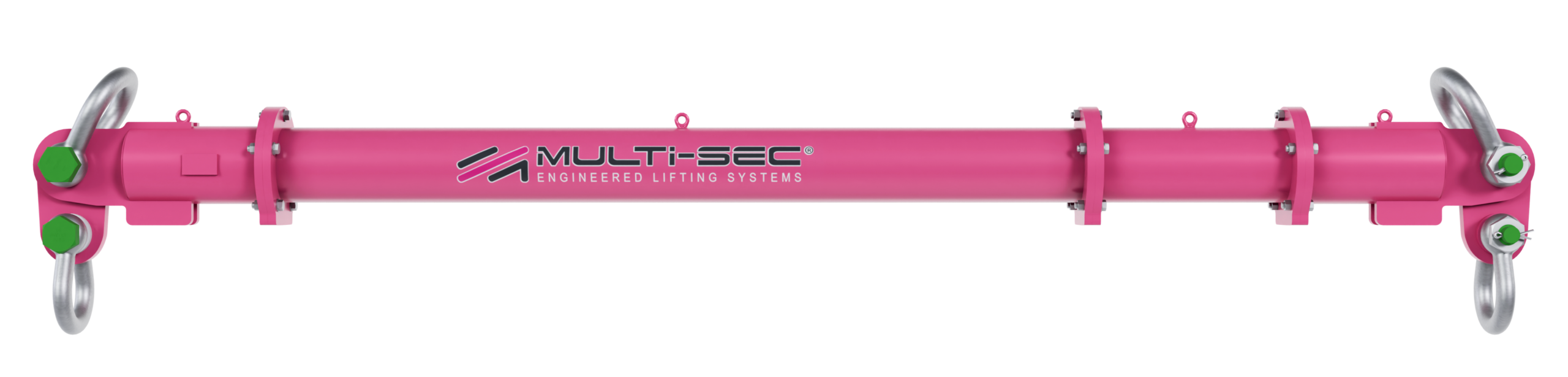
Key Characteristics of Spreader Beams
- Suspended from the crane by two or more slings
- Forces in the beam are primarily compressive
- Used to distribute loads across multiple lifting points
- Commonly used for wide loads or structures
What is a Lifting Beam?
A lifting beam differs from a spreader beam in that it is typically lifted from a single central lifting point. The beam connects directly to the crane hook, and the load is attached beneath the beam through multiple lifting lugs.
Because the lifting point is positioned above the beam, the beam experiences bending forces rather than compression.
Lifting beams are often used where headroom is limited or where a compact lifting arrangement is required.
Many lifting beams are designed with multiple lifting points along the underside, allowing engineers to adapt the lifting configuration depending on the load geometry.
Explore our multi-point lifting beam solutions →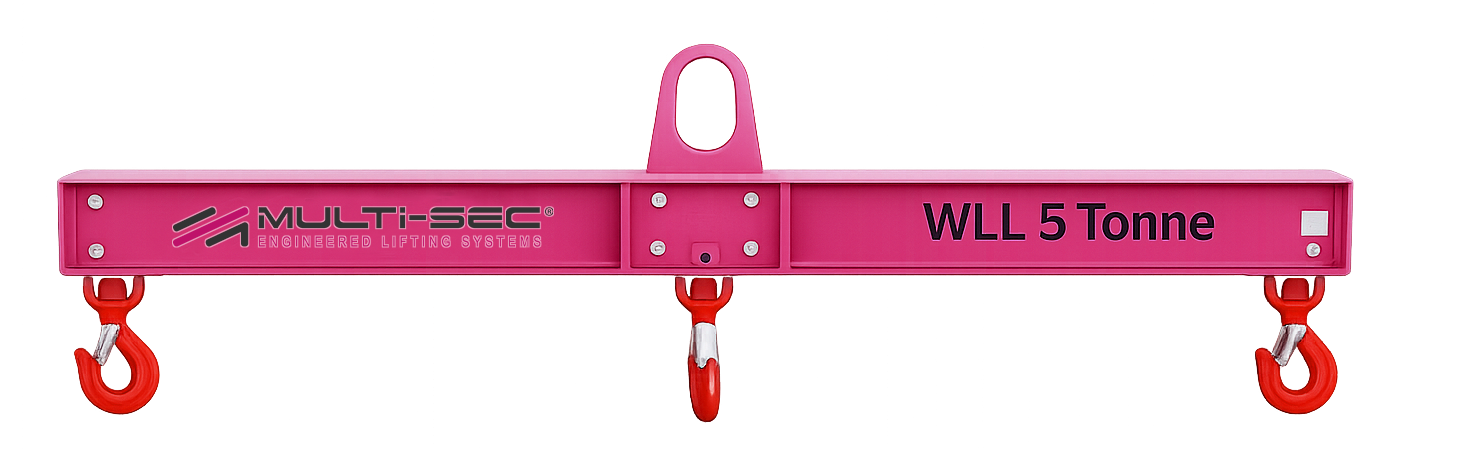
Key Characteristics of Lifting Beams
- Single central lifting point
- Beam experiences bending forces
- Load attached to multiple bottom lifting lugs
- Ideal for restricted headroom lifting situations
Which Beam Should You Use?
The correct choice depends on the load geometry, available headroom, lifting points and overall lifting arrangement.
Choose a Spreader Beam
- Wide or long loads
- Multiple lifting points spaced apart
- Offshore wind components
- Marine and port lifting operations
- Infrastructure and construction projects
- Where load stability is critical
Choose a Lifting Beam
- Restricted headroom
- Machinery and equipment lifting
- Manufacturing operations
- Compact lifting arrangements
- Controlled multi-point lifting
- Defined lifting locations beneath the beam
The safest approach is to evaluate the load geometry, lifting points, centre of gravity and available headroom before selecting a beam type.
Frequently Asked Questions
What is the difference between a spreader beam and a lifting beam?
The main difference between a spreader beam and a lifting beam is how force is transferred through the beam. A spreader beam transfers compressive forces using angled slings, whereas a lifting beam transfers loads through bending forces from a single lifting point.
When should a spreader beam be used?
Spreader beams are commonly used when lifting wide or long loads where the lifting points are spaced apart. They help distribute loads across multiple lifting points while maintaining stability.
When should a lifting beam be used?
Lifting beams are typically used when headroom is restricted or when a load requires multiple bottom lifting points beneath a single central lifting point.
Do spreader beams require more headroom?
Yes. Because spreader beams are usually suspended using angled slings attached to the crane hook, they generally require more headroom than lifting beams.
Why do spreader beams use angled slings?
Angled slings transfer load forces into the beam as compression. This allows the beam to distribute loads efficiently across multiple lifting points while maintaining stability.
Is a lifting beam stronger than a spreader beam?
Not necessarily. Both lifting beams and spreader beams are designed for specific lifting applications. The correct choice depends on the load, lifting geometry, available headroom and lifting arrangement.
Can a lifting beam replace a spreader beam?
In some applications, yes. However, the choice should always be based on load characteristics, lifting points, available headroom and engineering requirements.
What industries use lifting beams and spreader beams?
Both beam types are widely used in offshore wind, marine operations, infrastructure construction, manufacturing, heavy engineering and energy projects.
Need Help Selecting The Right Beam?
Multisec modular spreader beams, lifting beams and bespoke lifting solutions are used across offshore wind, infrastructure, marine and heavy engineering projects worldwide.
Our engineering team can help identify the most suitable lifting arrangement for your application.